
Entretien et rénovation
Building works for a maritime climate
Technical guidance on masonry, lime renders, summer shading, and energy efficiency, grounded in official benchmarks and the realities of salt air and intense sun.
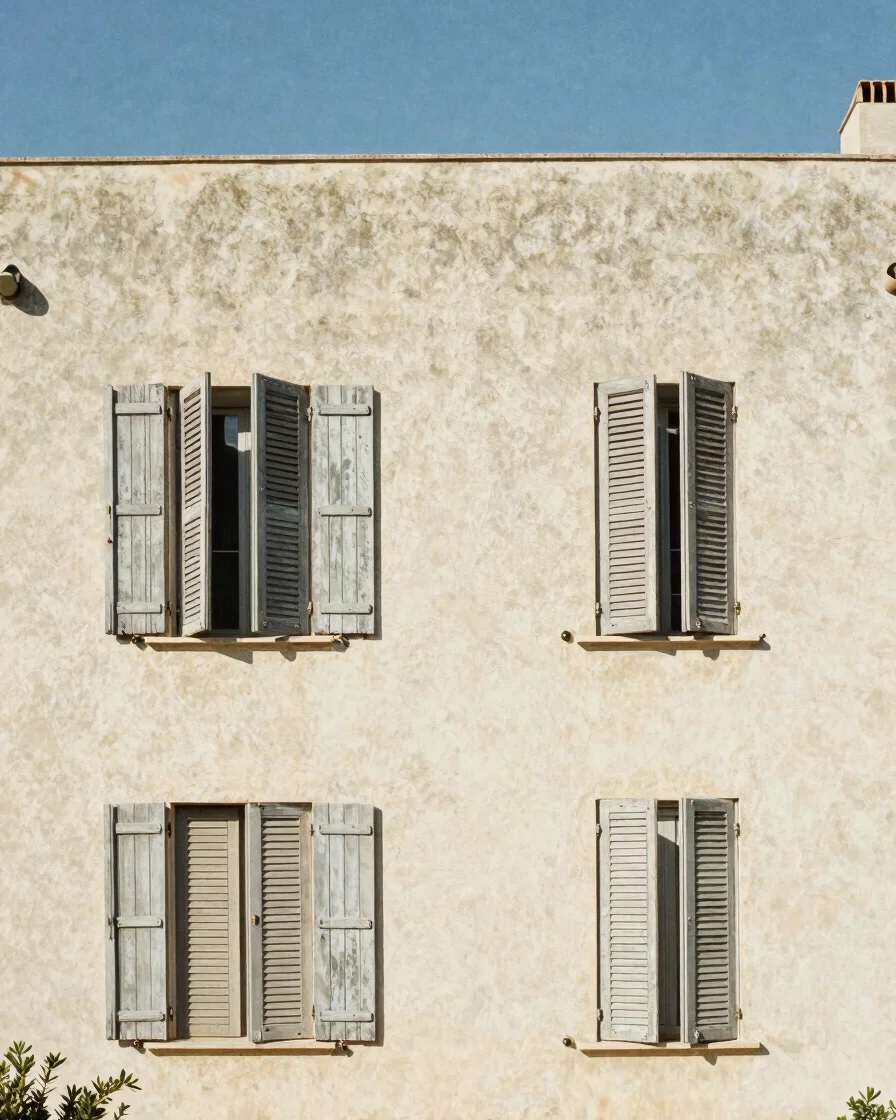
Coastal masonry
Materials that resist salt and sun
Lime-based renders breathe with the wall, letting trapped moisture escape rather than sealing it beneath a rigid skin. On exposed façades, traditional techniques pair well with modern, vapour-open finishes that tolerate salt spray and repeated thermal swings.
Shading and ventilation matter as much as the surface. Exterior shutters, deep reveals, and cross-ventilation routes reduce summer heat gain before any insulation is added, and they keep interior humidity manageable through the season.
Method
A sequence for energy upgrades
Start with a diagnosis, then choose insulation and track the results. Official benchmarks and grant criteria should guide each step.
Step 01
Thermal diagnostic audit
Map heat loss, moisture risk, and ventilation paths with a qualified thermal survey before selecting any materials.
Step 02
Bio-based insulation
Hemp, wood fibre, and cork offer vapour-open options that suit older masonry better than sealed synthetic boards.
Step 03
Performance tracking
Record consumption and indoor humidity over a full season to confirm the upgrade performs as the diagnosis predicted.